


NEWS CENTER
LONGHENG YUYINGLI
21
2021
-
12
What are the general types of 15.2 steel strands?
15.2 steel strands are divided into single-wire systems and stranded wire systems. (Cold) drawing skills are selected when manufacturing single wires. Depending on the material of the product, high-carbon steel wire rod, stainless steel wire rod, or medium-low carbon steel wire rod can be used. If galvanizing is required, electroplating or hot-dip galvanizing should be performed on the single wire.
In the manufacturing process of 15.2 steel strands, multiple steel wires are twisted together by a twisting machine to form a product. The prestressed steel strand also needs to be continuously stable after forming. After all, products are usually collected on a I-wheel (spool) or completed without a spool. Different 15.2 steel strands have different performance characteristics.
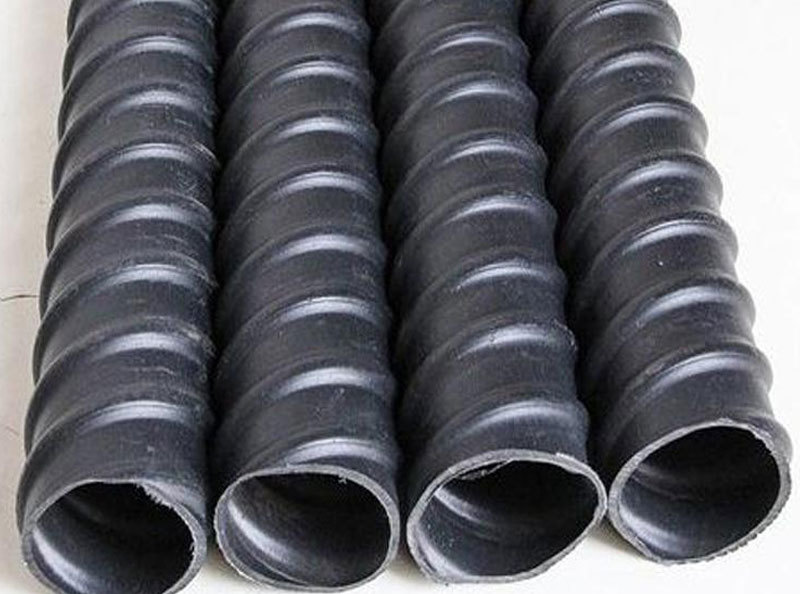
15.2 steel strands are divided into galvanized steel strands and prestressed steel strands. The commonly used diameter of prestressed steel strands is 9.53mm-17.8mm, with a small number of strands with larger diameters. Each prestressed steel strand generally has 7, 12, 19 steel wires. The steel wires can use metal or non-metal anticorrosion layers. Those coated with anticorrosion grease or paraffin and wrapped with HDPE are called unbonded prestressed steel strands.
When weaving steel strands, the steel strands should be straightened one by one first, and then bundled to avoid confusion. When the fixed end of the 15.2 steel strand is used to extrude steel strand anchors or embossed steel strand anchors, the production tools should be assembled with the pressure plate or spiral reinforcement first.
When tensioning 15.2 steel strands, especially before tensioning, it is necessary to understand the pressure test report of the concrete strength. In other words, concrete can only be used when its compressive strength meets the requirements of the construction design. The specific requirement is that its strength grade should reach 75%. Prestress can only be applied after this standard is reached.
When prestressing 15.2 steel strands, the machines, tools, equipment, or instruments used should be maintained, and relevant calibrations should be checked regularly.
Due to the complex structure of 15.2 steel strands, there is friction between multiple steel wires, resulting in uneven stress distribution in the steel strand section. When friction is not considered, the stress distribution in the steel strand section is uneven, the equivalent force of the afadf steel wire is slightly smaller, the outer steel wire gradually increases, and the equivalent force is distributed in a fan shape in the steel strand section.
When friction is considered, due to the combined influence of friction and the helical formation of the steel strand, the equivalent stress at the contact point of the steel wire is larger, the equivalent stress of the afadf steel wire is second, and the equivalent stress of the outer steel wire is smaller. In the overall structural design, the steel strand mainly bears axial force, and usually only the axial force of the steel strand is considered. At this time, in the analysis of the steel strand, it can be considered according to the uniform stress of the section, and the equivalent stress value needs to be analyzed, and the steel wire is subjected to complex influences such as tension, bending, and change. At this time, the uneven stress on the section should be considered, and the influence of friction on it should also be considered.
15.2 steel strands also exhibit good corrosion resistance in concrete, but under the action of ultraviolet rays, due to high-temperature exposure, the internal grease of the unbonded steel strands begins to become active due to its droplet characteristics. As we all know, the inclined cable is horizontally placed, and the movement of the internal grease will inevitably lead to uneven distribution of the cable.

specializing in the production of various specifications of prestressed concrete with steel strand, prestressed steel wire, unbonded prestressed steel strand and so on...
Tianjin Longheng Prestressed Steel Strand Co., Ltd.
After-sales hotline:022-68603799
Email: tjlhyyl@163.com
Headquarters address:North 301600 of Beihua Road, Jinghai Development Zone, Tianjin
Copyright©2023 Tianjin Longheng Prestressed Steel Strand Co., Ltd.