


NEWS CENTER
LONGHENG YUYINGLI
27
2021
-
10
Explanation of Unbonded Strand and its Functions by the Manufacturer
A common explanation of unbonded strands from strand manufacturers is that a layer of lubricant and a plastic sheath are applied to the strand (which can be called bare wire). In engineering construction, because there is grease and a sheath outside the concrete, the unbonded strand in the concrete can be freely loosened when hit, the strand is isolated from the concrete, and maintains an unbonded state with the concrete, hence the name unbonded strand.
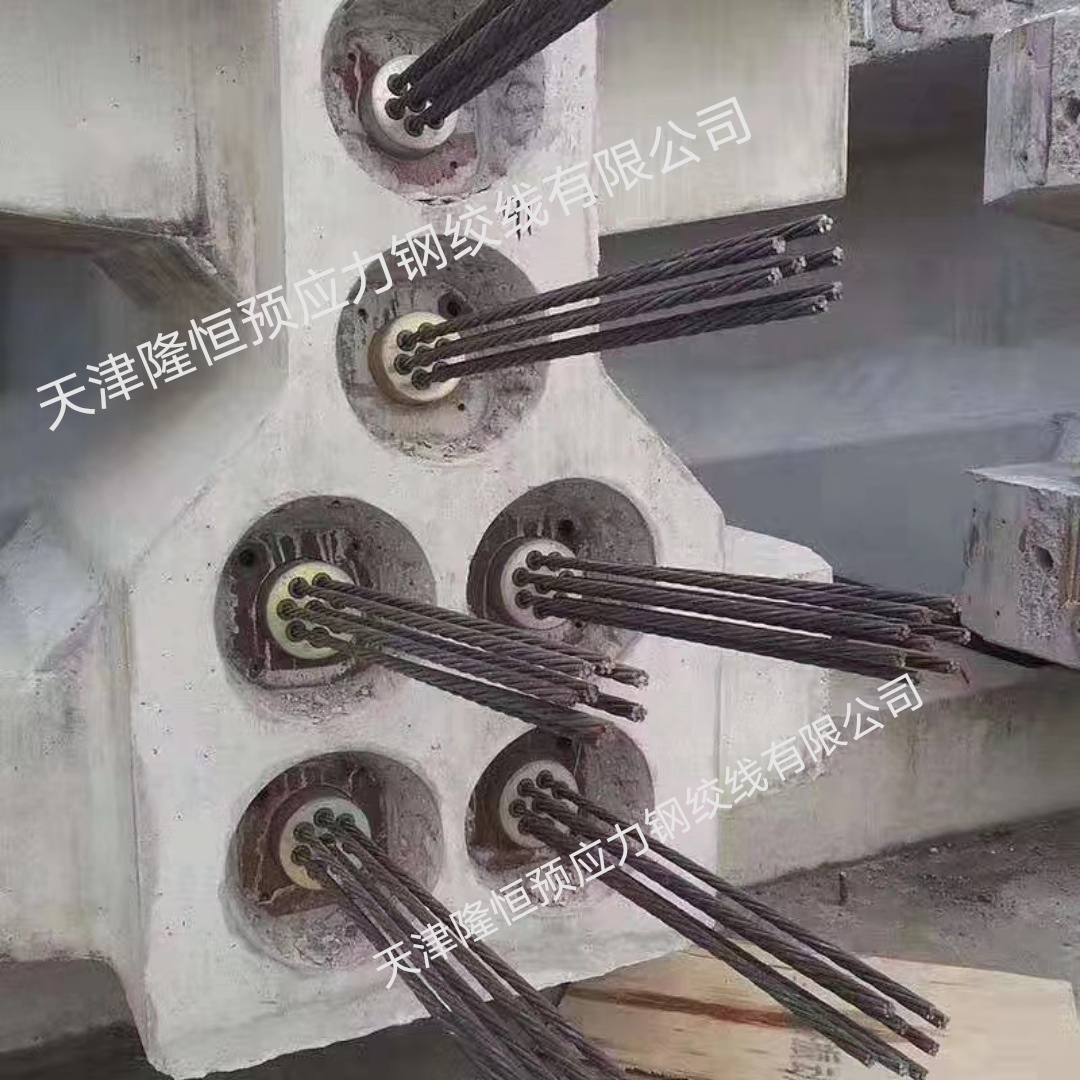
The application of unbonded strands is becoming increasingly widespread. They are mainly used in civil engineering projects with large static loads, large-span factories, or high-rise buildings. Unbonded strands from strand manufacturers offer faster construction speeds, reduced beam and slab thickness, improved structural performance, and significant economic benefits.
In recent years, in bridge construction design and large-span garage prestressed construction, due to the larger dynamic load, bonded strands are required. Due to construction grouting, they directly bond with the concrete, producing strong bonding force. Anchoring at both ends is not as difficult as with unbonded strand construction, improving the safety factor.
Strand manufacturers briefly introduced unbonded and bonded strands in the construction process of prestressed concrete structures. For unbonded prestressed strands, a layer of lubricant and a plastic sheath are applied to the strand. The unbonded strand in the concrete is called an unbonded strand because the outer grease and sheath isolate the strand from the concrete, allowing it to loosen freely and maintain an unbonded state with the concrete. Suitable for civil engineering projects with large static loads, large-span factories, or high-rise buildings. This utility model features fast construction speed, reduced beam and slab thickness, improved structural performance, and economic benefits.
Strands from strand manufacturers are a type of metallic material. A strand is a product composed of many steel wires.
The market demand for strands from strand manufacturers remains high. The main reason for this is that product homogeneity is quite serious, and many manufacturers have not made significant progress in production and quality. Therefore, when choosing to use them, qualified strands may not be selected. Therefore, when choosing strands, one thing we need to do is to distinguish between high-quality strands and those that only appear high-quality. Here we can use a small tool, a vernier caliper. Use it to measure whether the actual dimensions of the product are qualified. Some manufacturers will put some hands and feet on the rebar, such as a flattened state, which is biased in our field of vision.
In life, our understanding of strands from strand manufacturers is more or less, because strands are mainly used in construction projects. They can make buildings more stable, achieve good use effects, and bring great benefits to people's lives.
In addition, it is necessary to judge from the appearance of the strand. In fact, this is easy to distinguish. As long as you are careful enough, there will be no roughness, scars, manufacturer, batch number, and specifications. In addition, the choice of location is also exquisite. I suggest you purchase from intermediaries who specialize in selling strands and pay attention to the strength of the brand.

specializing in the production of various specifications of prestressed concrete with steel strand, prestressed steel wire, unbonded prestressed steel strand and so on...
Tianjin Longheng Prestressed Steel Strand Co., Ltd.
After-sales hotline:022-68603799
Email: tjlhyyl@163.com
Headquarters address:North 301600 of Beihua Road, Jinghai Development Zone, Tianjin
Copyright©2023 Tianjin Longheng Prestressed Steel Strand Co., Ltd.