


NEWS CENTER
LONGHENG YUYINGLI
09
2022
-
05
Applications and characteristics of unbonded steel strands
Unbonded steel strand Unbonded steel strands are steel strands coated with grease and a plastic sheath (also known as bare wires). In engineering construction, unbonded steel strands in concrete are called unbonded because the grease and sheath isolate them from the concrete, allowing them to move freely and remain unbonded to the concrete.
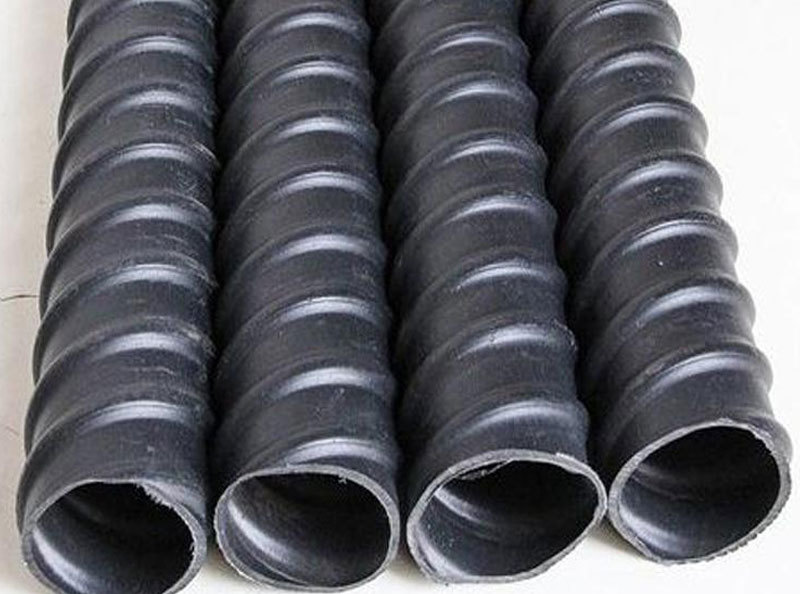
Unbonded steel strands are mainly used in civil engineering projects with large static loads, large-span factories, or high-rise buildings. Advantages: fast construction speed, reduced beam and slab thickness, improved structural performance and economic efficiency. Due to the large dynamic loads in bridge construction and large-span garage prestressed construction, the design requires the use of bonded steel strands, i.e., ordinary steel strands. Because the construction grouting directly bonds with the concrete, producing a strong bonding force, unlike the unbonded steel strand construction which is difficult to anchor at both ends, enhancing the safety factor.
Unbonded steel strands are mainly used in post-tensioning systems. The difference between unbonded and bonded steel strands lies in the prestress not bonding with the surrounding concrete. During its working period, the prestress is always allowed to slide longitudinally relative to the surrounding concrete. The prestress is fully transferred to the concrete through anchoring.
The materials of unbonded steel strands mainly include stress-relieved steel wires and steel strands. Steel wires and steel strands must not have dead bends; if they do, cut them off. Each steel wire must be long, and contact points are strictly prohibited. When calculating the length of prestressing tendons, factors such as component length, jack length, upset head allowance, elastic rebound value, tensile elongation value, steel grade, and construction method should be considered. The specific calculation method is basically the same as that of bonded prestressing tendons. When cutting prestressing tendons, it is advisable to use a grinding wheel saw or cutting machine, and not arc cutting. The steel wires in the steel wire bundle should be cut to the same length. When cutting steel strands, the two sides of the cut should be tied with 20# or 22# steel wires to prevent loosening after cutting.
The coating of unbonded steel strands is used to isolate the prestressing tendons from the concrete, reduce friction loss during the tensioning process, and prevent corrosion of the prestressing tendons. Commonly used coatings include anticorrosion asphalt and anticorrosion grease. The coating should have good chemical stability and toughness; at -20~70℃, it should not crack, become brittle, or flow, and should adhere well to the steel bars; the coating should be waterproof, moisture-proof, have good lubricity, and low frictional resistance. The outer coating is mainly made of plastic tape or high-pressure polyethylene plastic pipes. The outer coating should not become brittle at -20~70℃, have high chemical stability, strong damage resistance, sufficient toughness, good water resistance, and no corrosion to surrounding materials. Before use, dry or sun-dry the plastic to avoid bubbles causing cracks on the plastic surface during molding.
The above are some knowledge points about Unbonded steel strand ,hoping to help everyone.

specializing in the production of various specifications of prestressed concrete with steel strand, prestressed steel wire, unbonded prestressed steel strand and so on...
Tianjin Longheng Prestressed Steel Strand Co., Ltd.
After-sales hotline:022-68603799
Email: tjlhyyl@163.com
Headquarters address:North 301600 of Beihua Road, Jinghai Development Zone, Tianjin
Copyright©2023 Tianjin Longheng Prestressed Steel Strand Co., Ltd.