


NEWS CENTER
LONGHENG YUYINGLI
17
2022
-
05
Some knowledge points about unbonded steel strands
Unbonded steel strand Refers to the state where the unbonded steel strand is unbonded and not in direct contact with concrete. Unbonded steel strands are special prestressing tendons with an anti-corrosion isolation layer and an outer sheath.
Characteristics of unbonded steel strands:
(1) Simple structure, light weight. No need to reserve prestressing ducts, suitable for components with complex structures and curved reinforcement. The size of components is reduced and their self-weight is lightened.
(2) Simple construction, low equipment requirements. Unbonded steel strands do not require complex procedures such as reserving ducts or grouting. In the manufacturing of small to medium span bridges, replacing the pretensioning method can eliminate the need for tensioning supports, simplifying the construction process and accelerating construction progress.
(3) Small prestress loss, can be compensated. An anti-corrosion grease layer is provided between the unbonded steel strand and the outer sheath, resulting in small friction loss during tensioning. The prestressing tendons can be tensioned during their service life.
(4) Strong corrosion resistance. Unbonded steel strands coated with anti-corrosion grease and wrapped with a PE sheath have double corrosion protection. This can avoid the risk of prestressing steel corrosion caused by ungrouted ducts.
(5) Good performance. The mixed reinforcement of unbonded steel strands and ordinary rebar can meet the ultimate bearing capacity and avoid the occurrence of concentrated cracks, giving it similar mechanical properties to partially bonded prestressed concrete.
(6) Good fatigue resistance. Unbonded steel strands and concrete can slide longitudinally relative to each other, resulting in small stress amplitude, so fatigue problems will not occur during use.
(7) Good seismic performance. When seismic loads cause large displacements, the sliding unbonded steel strands always remain in tension, with little change in stress, staying within the elastic working stage, while ordinary rebar ensures the structure's energy dissipation.
However, unbonded steel strands have higher requirements for the safety, reliability, and durability of anchorage. Since unbonded steel strands can slide longitudinally relative to concrete, the tensile capacity of the prestressing tendons cannot be fully utilized, and a certain number of bonded tendons are required to limit cracks in the concrete.
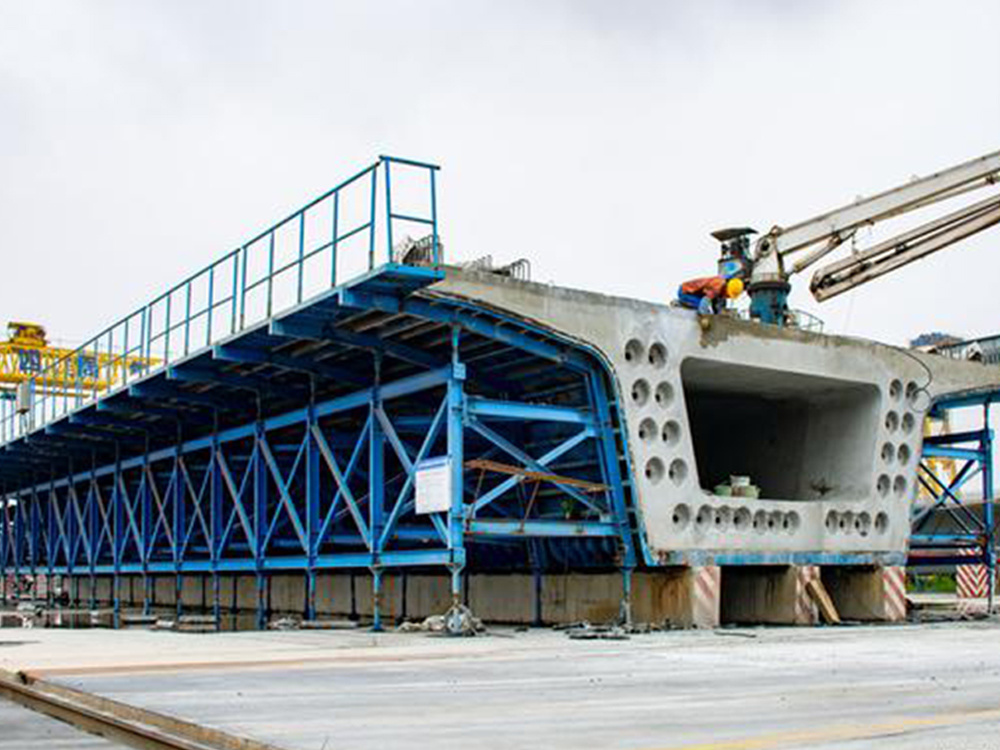
Unbonded steel strands are mainly used in post-tensioned prestressing systems. The difference between unbonded and bonded prestressed steel strands is that the prestressing is not bonded to the surrounding concrete. During its operation, the prestressing tendons and the surrounding concrete are always allowed to slide longitudinally, and the prestressing is fully transferred to the concrete through anchorage. During construction, unbonded tendons can be placed directly into the formwork like ordinary rebar, and then concrete is poured. After the concrete reaches the design strength requirements, tensioning and anchoring are performed, eliminating the need for ducts, grouting, and other procedures.
The above is about Unbonded steel strand some knowledge points. I hope everyone can earnestly learn and understand the relevant knowledge and choose products that suit their needs.

specializing in the production of various specifications of prestressed concrete with steel strand, prestressed steel wire, unbonded prestressed steel strand and so on...
Tianjin Longheng Prestressed Steel Strand Co., Ltd.
After-sales hotline:022-68603799
Email: tjlhyyl@163.com
Headquarters address:North 301600 of Beihua Road, Jinghai Development Zone, Tianjin
Copyright©2023 Tianjin Longheng Prestressed Steel Strand Co., Ltd.